
School Sail Shades: Complete Guide to Protective Playground Shade Solutions
- Carmel Camingao
- Dec 12, 2025
- 14 min read

Updated: Dec 19, 2025
Every school day, millions of children spend hours outdoors during recess, physical education, and lunch breaks. School sail shades are constructed from durable, UV-resistant materials and are often manufactured in the USA, emphasizing their build quality and American craftsmanship. With rising awareness of skin cancer risks and heat-related illnesses, schools across the country are investing in protective shade solutions to create safer outdoor learning environments. Shade sails block up to 95% of UV radiation, reducing sun exposure during peak hours. School sail shades have emerged as the leading choice for educational facilities seeking cost-effective, flexible, and visually appealing sun protection.
These structures are crafted from recyclable materials, providing an environmental benefit.
This comprehensive guide covers everything school administrators, facilities managers, and parent organizations need to know about implementing shade structures that protect children while enhancing playground aesthetics and functionality. Explore the various shade solutions, benefits, and design possibilities featured in this guide.
What Are School Sail Shades and Why Schools Need Them
School sail shades are engineered fabric structures designed specifically for educational environments, featuring triangular or rectangular tensioned membranes that create protective canopies over play areas and outdoor learning spaces. Unlike temporary patio umbrellas or basic canopy systems, these permanent shade solutions are custom-designed to withstand commercial use while providing reliable protection for students and staff.
The primary function of these structures centers on their ability to block harmful UV rays, with quality installations capable of filtering up to 97% of dangerous ultraviolet radiation. This level of protection dramatically reduces surface temperatures by 10-15 degrees Fahrenheit, creating comfortable outdoor spaces even during peak sun hours. The CDC recommends using shade as a primary sun safety measure during peak midday hours. Commercial shade sails can block up to 97% of harmful UV rays, providing exceptional protection.
Schools nationwide are recognizing shade structures as essential safety infrastructure rather than optional amenities. The growing requirement stems from increased awareness of sun exposure risks, particularly for children whose developing skin is more susceptible to UV damage. Many school districts now mandate adequate shade coverage for outdoor spaces where students spend extended periods.
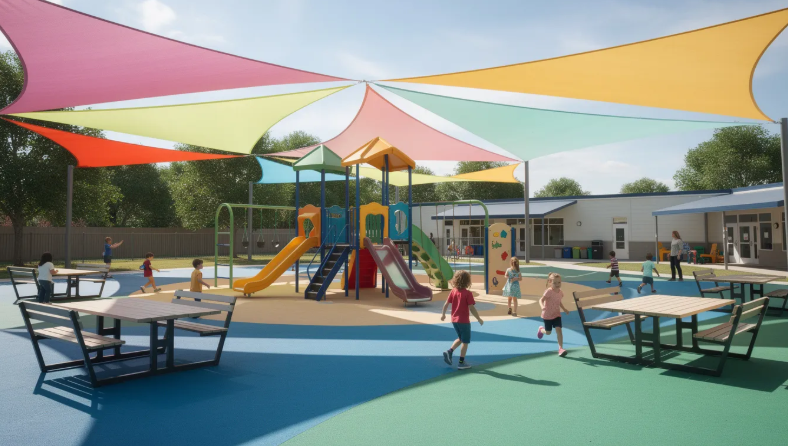
Beyond UV protection, school sail shades offer remarkable cost-effectiveness compared to permanent building additions or solid roof structures. A typical shade sail installation costs significantly less than constructing permanent pavilions while providing greater design flexibility to accommodate existing playground equipment and future layout changes. Shade sails can be customized in various sizes, styles, and colors to fit the specific needs of each school.
The versatility of sail shade systems allows schools to create targeted protection exactly where needed. Whether covering playground equipment, outdoor classrooms, dining areas, or walkways, these structures adapt to irregular spaces and specific coverage requirements that traditional building methods cannot economically address. Shade sails also help prevent playground equipment from getting too hot, which can cause it to warp or crack.
Safety and Health Benefits for Students
The health and safety advantages of properly installed school sail shades extend far beyond basic comfort, addressing critical concerns that affect student wellbeing and educational outcomes. UV protection represents the most significant benefit, as prolonged sun exposure during childhood dramatically increases lifetime skin cancer risk.
Recent studies indicate that just five severe sunburns during childhood double an individual’s risk of developing melanoma later in life. School sail shades provide consistent protection during the most dangerous UV hours, typically between 10 AM and 4 PM when most outdoor school activities occur.
Heat-related illness prevention becomes increasingly important as climate change brings more extreme weather events to school communities. Shade structures enable students to remain active outdoors even during hot weather conditions, supporting physical education requirements and outdoor learning initiatives that might otherwise be canceled for safety reasons.
Playground equipment protection represents another crucial safety consideration often overlooked during planning discussions. Metal slides, climbing structures, and swings can reach dangerous temperatures exceeding 150 degrees Fahrenheit when exposed to direct sun. Properly positioned shade sails prevent equipment overheating that causes painful burns and limits playground usability during sunny conditions.
Extended outdoor learning opportunities become possible when schools provide adequate shade coverage. Teachers report increased willingness to conduct outdoor lessons when comfortable, protected spaces are available, supporting educational initiatives that connect students with nature and provide alternative learning environments.
The comfort enhancement for supervising staff cannot be understated, as teachers and monitors spending extended periods outdoors require protection from heat stress and UV exposure. Comfortable supervision conditions improve safety oversight and enable more engaging outdoor activities.
Temperature Reduction and Comfort Enhancement
The measurable temperature benefits of school sail shades create dramatically more comfortable outdoor environments for learning and play. Quality shade installations typically produce temperature drops of 10-20 degrees Fahrenheit beneath the fabric canopy, with some configurations achieving even greater cooling effects during peak heat conditions.
Breathable fabric options maintain natural airflow while blocking harmful rays, preventing the stagnant air problems associated with solid roof structures. This ventilation characteristic proves especially important in humid climates where air circulation helps prevent heat stress and maintains comfortable conditions for extended outdoor activities.
Protection from various weather elements extends the utility of shaded areas beyond sunny day benefits. Many shade sail configurations provide light rain protection, allowing outdoor activities to continue during brief weather events. Some installations even offer snow load capabilities, though seasonal removal may be required in areas with severe winter conditions.
Glare reduction represents an often-overlooked benefit that significantly improves outdoor learning conditions. Direct sunlight creates reading difficulties and visual strain that interfere with educational activities. Shade structures eliminate these problems while maintaining adequate lighting for outdoor instruction and supervised play.
The cumulative effect of temperature reduction, airflow maintenance, and weather protection creates outdoor spaces that rival indoor comfort levels while providing the psychological and educational benefits of natural environments. Designated shaded areas also offer essential spaces for children and supervising staff to rest and cool down during outdoor activities, ensuring comfort and safety throughout the day.
Types and Styles of School Shade Sails
Triangle shade sails represent the most versatile option for school installations, offering three-point anchoring systems that adapt to irregular playground layouts and tight corner spaces. These configurations work particularly well around existing equipment, between buildings, or over small activity areas where rectangular structures would be impractical.
The geometric flexibility of triangular designs allows creative overlapping installations that provide expanded coverage while creating visually striking patterns. Multiple triangles can be layered at varying heights to accommodate different equipment clearances while ensuring comprehensive protection across complex playground footprints.
Rectangle and square shade sails provide maximum coverage efficiency for large, open play areas where consistent protection is needed across substantial square footage. These designs work exceptionally well over multi-use courts, dining areas, and linear spaces such as walkways or queue lines.
The spanning capability of rectangular structures makes them ideal for covering large playground zones with minimal post installations. However, careful engineering is required to manage the increased wind loads and tensile forces associated with larger fabric areas.
Custom-shaped sails offer unlimited design possibilities for schools with unique coverage requirements or architectural considerations. These bespoke solutions can follow irregular building lines, accommodate specific equipment layouts, or create signature installations that enhance school identity and visual appeal.

Waterproof versus permeable fabric options present important decision points that affect both performance and cost. Permeable shade cloth allows air circulation and rain drainage while providing excellent UV protection, making it suitable for most school applications where some air movement is beneficial.
Non-permeable waterproof membranes create true outdoor rooms that provide complete protection from rain and sun but require more sophisticated engineering to handle wind loads and water drainage. These installations work well for outdoor classrooms and dining areas where weather protection enables year-round use.
Hip and ridge style structures combine multiple fabric panels with steel frame supports to create more complex coverage patterns over large areas. These systems work particularly well for schools needing extensive coverage with minimal post installations or where architectural integration with existing buildings is important.
Material and Color Considerations
High-Density Polyethylene (HDPE) fabric represents the industry standard for school installations, offering exceptional durability, UV resistance, and cost-effectiveness. This material maintains its protective properties for 10-15 years while resisting tearing, fading, and weather-related degradation that affects lower-quality alternatives.
Color selection impacts both UV protection performance and aesthetic integration with school environments. Darker colors typically provide superior UV blocking capabilities, with some deep blues and grays achieving up to 98% protection levels. However, darker fabrics may absorb more heat, requiring careful consideration of airflow and ventilation.
Lighter colors reflect more solar radiation, potentially reducing heat absorption in the fabric itself while still providing excellent UV protection. These options often work well in extremely hot climates where minimizing heat accumulation is prioritized over maximum UV blocking performance.
Flame-resistant materials meeting school safety requirements and local fire codes are essential for educational installations. Quality manufacturers provide fabrics that self-extinguish and resist flame spread while maintaining all other performance characteristics required for long-term outdoor use.
Recyclable material options support school environmental sustainability goals while providing identical performance to traditional alternatives. These choices help schools meet green building requirements and demonstrate environmental leadership to students and community members.
The color stability of quality fabrics ensures that installations maintain their visual appeal throughout their service life. Fade-resistant treatments prevent the unsightly discoloration that can make school grounds appear poorly maintained despite proper care and maintenance.
Installation Requirements and Planning
Professional assessment of soil conditions and anchor point locations forms the foundation of safe, long-lasting shade sail installations. Soil testing determines the appropriate foundation design and depth requirements that vary significantly based on local geology, drainage patterns, and freeze-thaw cycles.
Proper installation of shade sails requires solid groundwork to prevent movement during high winds, ensuring long-term safety and stability.
Qualified engineers must evaluate wind loads, fabric tensions, and structural requirements to ensure installations meet or exceed city-specific building codes and safety standards. This engineering analysis becomes particularly critical in areas prone to severe weather events or high wind conditions.
Minimum height requirements ensure adequate clearance for playground equipment and student activities while maintaining proper fabric tension and drainage characteristics. Most installations require clearances of 8-12 feet over play areas, with additional height needed for larger spans or areas with tall equipment.
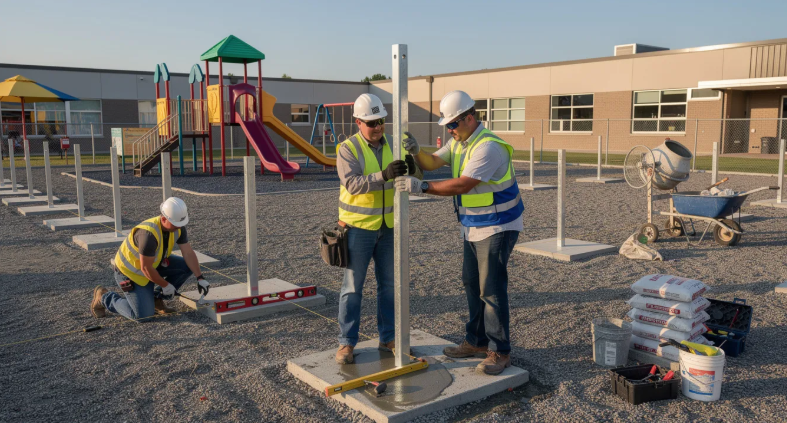
Wind load calculations must account for the fabric area, local climate conditions, and safety factors that protect against extreme weather events. Proper engineering prevents catastrophic failures that could endanger students and damage surrounding property during storms.
Permit requirements and building code compliance vary significantly between school districts and municipalities, making professional guidance essential during planning phases. Experienced contractors familiar with educational facility requirements can navigate these regulatory requirements efficiently.
Coordination with existing playground equipment and utility lines requires careful site surveys and planning to avoid conflicts during installation. Underground utilities, drainage systems, and future expansion plans must be considered to prevent costly relocations or modifications.
Timing installations during school breaks or summer recess minimizes disruption to educational activities while ensuring adequate time for proper foundation curing and system commissioning before students return.
Anchor Points and Support Systems
Galvanized steel posts rated for commercial playground use provide the structural foundation for reliable shade sail systems. These posts must withstand substantial lateral forces from wind loading and fabric tension while resisting corrosion in outdoor environments for decades of service life.
Post sizing and spacing calculations require professional engineering to ensure adequate strength and stability for specific site conditions and fabric configurations. Undersized posts represent a safety hazard that can lead to system failure during severe weather events.
Concrete foundation requirements typically demand excavations 3-4 feet deep, depending on local soil conditions, frost line depths, and calculated load requirements. Proper foundation design distributes structural loads safely into the surrounding soil while preventing post movement or settling.
Building attachment options can reduce foundation requirements and costs when existing structures provide suitable anchor points. However, building connections require structural analysis to ensure the existing construction can safely handle additional loads without damage.
Tensioning systems using marine-grade hardware maintain proper fabric positioning while accommodating thermal expansion and contraction cycles. Quality installations use stainless steel or galvanized components that resist corrosion and fatigue under constant loading conditions.
The hardware components including turnbuckles, shackles, and mounting plates must be sized appropriately for the loads involved while providing accessibility for maintenance and adjustment procedures. Undersized hardware represents a failure point that can compromise entire installations.
Post foundations in high-traffic areas may require protective barriers or landscaping to prevent damage from maintenance equipment or recreational activities while maintaining safe clearances for normal playground use.
Safety and Compliance for Commercial Shade
Ensuring the safety and compliance of playground shade structures is essential for any school or organization looking to protect children and create secure outdoor spaces. Commercial shade solutions are engineered to meet rigorous safety standards, including resistance to wind, weight loads, and the long-term effects of sun exposure. By selecting shade sails and structures that comply with local building codes and industry regulations, schools can confidently provide environments that shield students from harmful UV rays and other environmental hazards.
Leading manufacturers offer detailed guidance and support throughout the planning and installation process, helping schools navigate the complexities of compliance. This includes recommendations for proper anchoring, material selection, and installation techniques that maximize the effectiveness of the shade sail while ensuring structural integrity. Regular inspections and proactive maintenance are also vital, as they help identify potential issues before they become safety concerns, extending the life of the shade and maintaining its protective qualities.
By prioritizing safety and compliance, schools and communities not only protect children from the dangers of UV rays but also create outdoor spaces where everyone can enjoy the benefits of shade with peace of mind. Investing in commercial shade solutions that meet or exceed safety standards is a crucial step in fostering a healthy, enjoyable, and protected environment for all.
Innovative Solutions for Play Areas
Today’s playgrounds are more than just places to play—they’re dynamic environments designed to inspire creativity, exploration, and social interaction. Innovative shade structures, such as hip shade and custom-designed shade sails, allow schools and communities to create play areas that are both functional and visually captivating. These modern shade solutions can be tailored to fit any playground equipment layout, seamlessly integrating with slides, climbing frames, and other features to provide comprehensive protection from the sun’s rays.
By incorporating a variety of shapes, colors, and configurations, playground designers can craft unique outdoor spaces that reflect the character of the school or park while ensuring kids stay cool and safe. Hip shade structures, for example, offer broad coverage and a sleek profile, making them ideal for high-traffic play areas. Shade sails can be layered or arranged in creative patterns to accommodate irregular spaces and enhance the overall aesthetics of the playground.
Beyond just covering play equipment, innovative shade solutions can be extended to seating areas, walkways, and gathering spots, creating a cohesive and inviting atmosphere for the entire community. By investing in these advanced shade structures, schools and parks not only protect children from harmful rays but also encourage active play, exploration, and socialization in a safe and comfortable environment.
Durable Protection with Hip Shade
Hip shade structures are renowned for their durability and ability to provide lasting protection for playgrounds and outdoor spaces. Engineered with robust steel frames and high-quality fabric, these shade sails are designed to withstand the rigors of daily use and exposure to the elements. The fabric used in hip shade structures is specially manufactured to resist fading, tearing, and weathering, ensuring that the shade remains effective and visually appealing year after year.
The clean, modern lines of hip shade structures add a touch of style to any playground, complementing both traditional and contemporary designs. Their versatility allows for customization to fit specific playground layouts, ensuring that every piece of equipment—and every child—benefits from reliable shade. This not only helps keep playground equipment cool and safe to touch but also creates a comfortable environment where kids can play freely, even on the hottest days.
For schools and community centers, hip shade offers a low-maintenance solution that delivers long-term value. With minimal upkeep required and a proven track record of performance, these structures are an excellent investment in the safety, comfort, and enjoyment of children and families who use outdoor play areas.
Sustainable Shading Options
As environmental awareness grows, schools, parks, and community centers are increasingly seeking sustainable shading options for their outdoor spaces. Modern commercial shade structures are now available in eco-friendly materials, such as recyclable HDPE fabric, which not only blocks harmful UV rays but also supports long-term environmental goals. These sustainable shade sails are designed for durability, reducing the need for frequent replacements and minimizing waste over their lifespan.
Sustainable shading solutions can also be integrated with other green features, such as solar panels for renewable energy or rainwater harvesting systems to support landscaping. By choosing shade structures that are both effective and environmentally responsible, organizations demonstrate a commitment to protecting both children and the planet.
These eco-friendly options provide the same high level of UV protection and comfort as traditional shade structures, ensuring that kids can play and learn safely outdoors. By investing in sustainable shade, schools and communities create healthier environments, reduce their ecological footprint, and set a positive example for future generations.
Maintenance and Longevity
Regular inspection schedules recommended every 3-6 months help identify potential issues before they compromise safety or require expensive repairs. These inspections should focus on fabric condition, hardware integrity, and post stability to ensure continued safe operation. Regular care is essential to ensuring the longevity of your shade sails.
Professional inspectors trained in tensile structure evaluation can identify subtle problems such as fabric stress concentrations, hardware fatigue, or foundation movement that untrained observers might miss. Annual professional inspections supplement regular maintenance staff reviews.
Cleaning protocols using mild soap and water prevent dirt buildup and organic growth that can degrade fabric performance and appearance over time. Pressure washing should be avoided as it can damage fabric coatings and accelerate wear patterns that reduce service life.
Seasonal maintenance requirements may include tensioning adjustments as fabrics naturally stretch during initial service periods. Some installations in severe weather regions require seasonal removal to prevent damage from ice, snow loading, or extreme wind events. It's best to inspect shade sails closely after big storms or harsh weather since these events could harm them.
Expected service life of 10-15 years with proper maintenance and quality materials provides excellent long-term value for school investments. However, actual lifespan depends on local climate conditions, maintenance quality, and initial installation standards.
Warranty coverage typically ranges from 5-10 years for fabric components and longer periods for structural elements, providing financial protection against premature failures. Quality manufacturers stand behind their products with an industry leading warranty and comprehensive warranty programs that cover both materials and workmanship.
Documentation of maintenance activities and inspection results helps schools track system condition while providing valuable information for warranty claims or insurance purposes. Proper record-keeping also assists in budgeting for eventual replacement or system upgrades. If a shade sail is damaged or worn-out beyond repair, it may be necessary to replace it to maintain safety, durability, and continued protection.
Common Issues and Solutions
Fabric stretching represents a normal characteristic of textile structures that typically stabilizes after initial installation periods. Proper tensioning during installation and periodic adjustments during the first year help minimize ongoing maintenance requirements.
Re-tensioning procedures should only be performed by qualified technicians familiar with the specific installation requirements and hardware configurations. Improper tensioning can damage fabric or hardware while creating safety hazards for users.
Mold and mildew prevention requires adequate ventilation around fabric structures and prompt attention to any moisture retention areas. Quality installations with proper drainage and airflow rarely experience biological growth problems.
Regular cleaning schedules help prevent organic buildup that can lead to staining or material degradation. Simple maintenance prevents expensive cleaning procedures or premature fabric replacement due to neglect.
Hardware inspection should focus on connection points where movement and loading create wear patterns that can lead to failure. Turnbuckles, shackles, and mounting hardware require periodic lubrication and replacement based on manufacturer recommendations.
Tensioning cable inspection looks for fraying, corrosion, or fatigue that can cause sudden failures. Stainless steel or galvanized cables properly sized for the application typically provide decades of reliable service.
Storm damage prevention includes following manufacturer recommendations for severe weather preparation, which may include tensioning adjustments or temporary removal in extreme conditions. Post-storm inspections help identify any damage before systems are returned to normal use.
Cost Considerations and Budget Planning
Typical installation costs range from $8-15 per square foot depending on project size, site complexity, and local labor rates. These figures include professional engineering, quality materials, and proper installation but may vary significantly based on specific project requirements, regional cost differences, and the price of different shade sail options.
Factors affecting pricing include site preparation requirements, soil conditions, accessibility for construction equipment, and custom design elements that require specialized fabrication or installation techniques. Remote locations or sites with difficult access typically increase project costs.
Foundation requirements can significantly impact total project costs, particularly in areas with poor soil conditions or high water tables that require specialized foundation designs. Rock excavation or other challenging site conditions add substantial expense to base installation costs.
Custom sizing and complex configurations increase material and labor costs compared to standard rectangular installations. However, the improved functionality and coverage efficiency of custom designs often justify the additional investment through enhanced performance.
Local labor costs and contractor availability affect project pricing, particularly in areas where specialized tensile structure contractors are not readily available. Schools may benefit from grouping projects with other districts to achieve better pricing through volume purchasing.
Comparison with permanent structure alternatives demonstrates the value proposition of shade sails, which typically cost 30-50% less than equivalent coverage using traditional building methods. Additionally, shade structures avoid the permitting complexity and construction disruption associated with permanent additions.
When sourcing materials and planning delivery, it's important to consider that some providers can ship school sail shades quickly, often within a specified timeframe such as 10 business days.
Return on investment calculations should include reduced playground equipment maintenance costs due to UV protection, extended usability of outdoor spaces during hot weather, and potential energy savings from reduced air conditioning loads in adjacent buildings.
Funding options available to schools include PTA fundraising campaigns, educational foundation grants, municipal recreation department partnerships, and capital improvement budget allocations. Many schools successfully combine multiple funding sources to complete comprehensive shading projects.
The phased implementation approach allows schools to address priority areas initially while planning future expansion as additional funding becomes available. This strategy provides immediate benefits while building support for comprehensive coverage projects.
For a detailed quote or more information about school sail shade solutions, contact us today.


Comments